Disclosure: This feature profiles The Utah Times creator Mike Richy and his cousin Kensington Rhodes. It draws on their published interviews, websites and videos.
At the first Connecting Creators meetup in downtown Provo, Kensington Rhodes thought one other person might show up. Ten arrived. They walked Center Street with cameras, made pictures and ended up outside a coffee shop, talking about why they made things in the first place.
That small gathering contains the idea Mike Richy and Rhodes have been building ever since: put creative people in the same place, give them something to make, and leave room for a conversation that goes deeper than an introduction.
The two are cousins, collaborators and the people guiding Connecting Creators’ current chapter. Their work spans community events, a podcast, filmmaking and the development of Viddy Studio. Underneath those different formats is a shared question: how do you help someone take the next step in a creative life?
Mike Richy: turning the camera toward his own story
Richy’s route into the work began with photography and widened into video. On Tyson Media’s A Filmmaker’s Journey, he describes a 2016 trip to New York that led to photographing entrepreneur Gerard Adams, then an invitation to work with him in New Jersey. Making videos became a professional path he had not fully imagined for himself.
That experience also connected him with Truman Mylin, with whom he later built Templemill Productions. Richy’s current portfolio traces that range: entrepreneurial storytelling, interviews, travel work and Connecting Creators itself.
In the community’s origin video, Richy explains that Connecting Creators began around 2019 as an Instagram page sharing creative work, then became a podcast with Mylin. Other projects followed, including Conversations with Humans. The practice accumulated even when the formats changed: recording conversations, learning production and figuring out what deserved the time of the person watching.
The revived community gives those skills a more personal direction. After years spent making content for clients, Richy is increasingly putting his own music, ideas and creative process into public view.
Kensington Rhodes: finding the creator inside the builder
Rhodes came to that work through a different door. In the Tyson Media interview, he describes studying Korean, working in tech sales and initially seeing himself as an entrepreneur without identifying strongly as an artist.
Travel helped change that. He bought a camera, made videos in Guatemala and began to recognize how much he wanted to build something meaningful. A production trip with Richy to Las Vegas became a practical introduction to working together; he later joined the Templemill team.
His role expanded with the needs of a small production company: sales, an extra camera, lighting, podcast switching. On A Filmmaker’s Journey, Rhodes describes Richy as a major source of creative direction and branding, while much of his own work involves executing that vision. They exchange ideas and cover different strengths.
Their family connection is part of the working relationship, too. They describe trust built over a lifetime, backed by a willingness to address difficult conversations early. The partnership gives both of them someone who understands the ambition and can help turn it into a workable next step.
A community built through doing
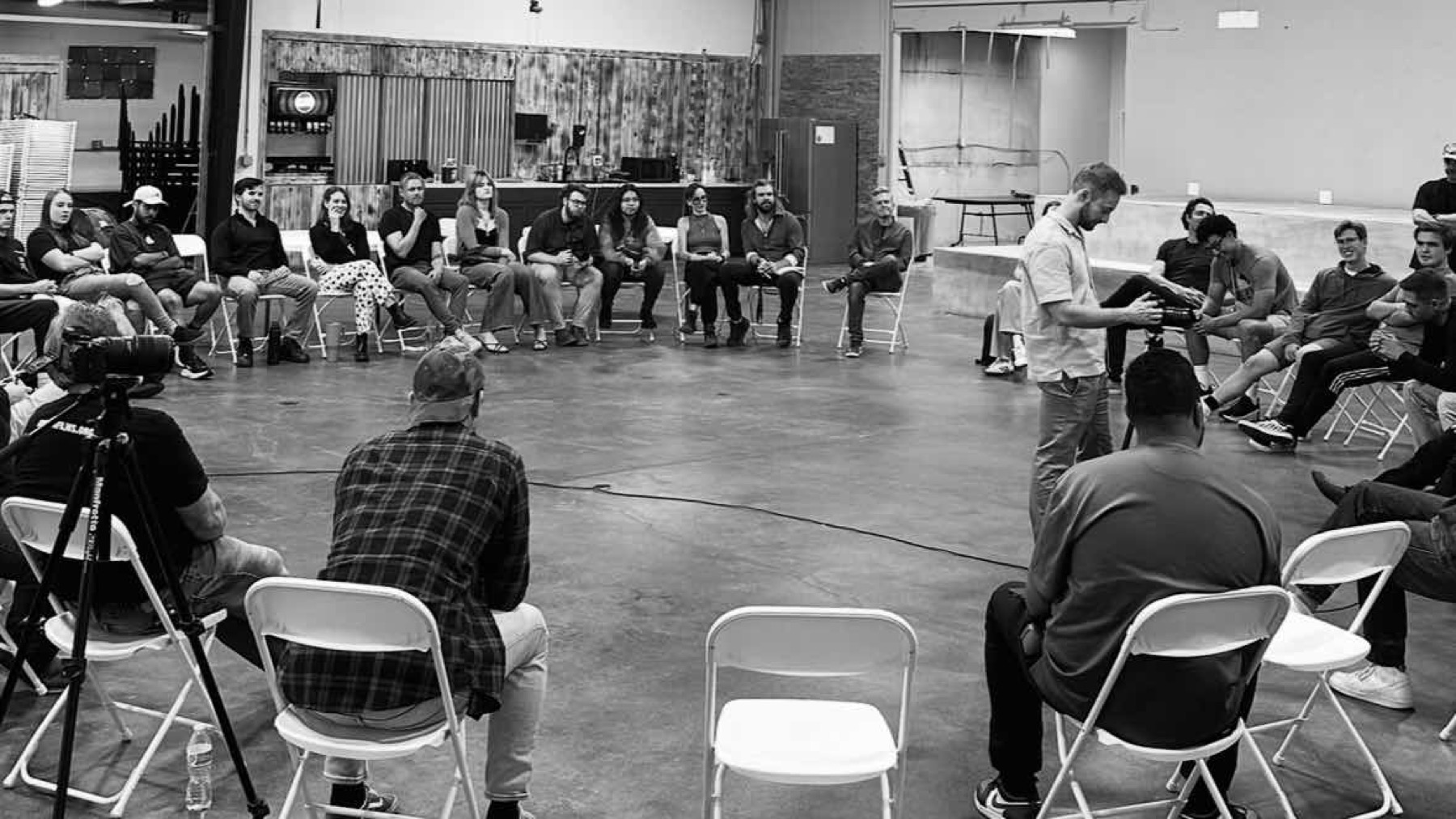
In their origin video, the cousins recall participants speaking on camera for the first time during the Provo meetup. The group made that exposure easier: someone could try, see what happened and leave with a little more confidence.
On A Filmmaker’s Journey, they describe how those early gatherings developed into creator circles, where participants could share the experiences behind their work. Featured creators and live performances became other ways to give people a platform. Their account emphasizes meaningful individual connections, even as the events grew.
The current Connecting Creators website carries that invitation across disciplines, welcoming filmmakers, musicians, designers and other creators. It links to events, community discussion and a way to submit work for consideration. A person can enter through the medium they already know and encounter somebody working in another one.
Richy’s personal channel shows the same idea changing his own habits. In Inside Salt Lake’s Underground Creative Scene, he explains his move away from doing everything alone in a home studio. He documents meeting artists, visiting an open mic and joining a room where music, engineering and photography happen together.
That makes the community an ongoing creative practice for its organizers as well. Richy and Rhodes are making opportunities they want to participate in, then opening those opportunities to other people. The first ten people on Center Street became a reason to gather again. Each conversation, performance and collaboration gives the next person another way into the room.