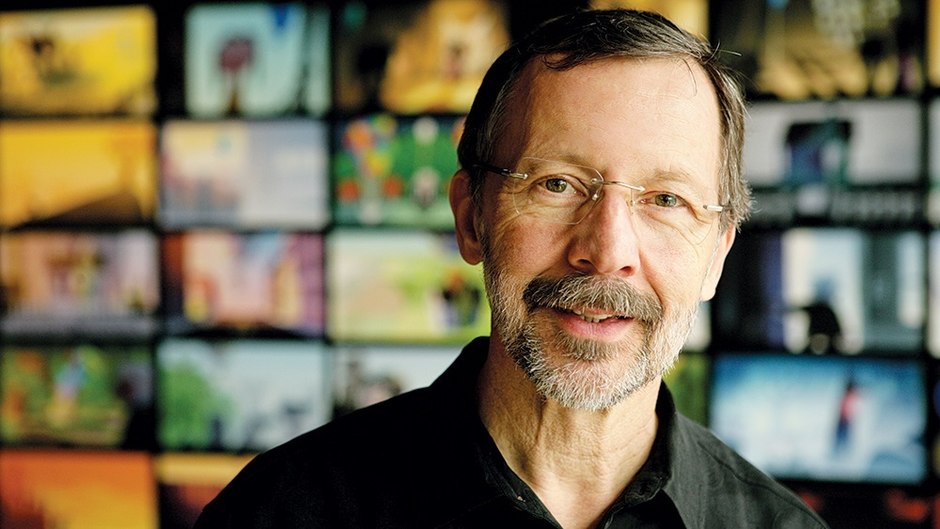
Before Woody and Buzz, there was a hand. In 1972, University of Utah graduate students Ed Catmull and Fred Parke made a short film that helped demonstrate something extraordinary: a computer could represent a three-dimensional object and make it move.
The object was Catmull’s left hand. The ambition reached much further. He wanted to make a computer-animated movie, and the tools to do it barely existed.
Pixar would be built in California, years later. But an important part of its technological ancestry was taking shape in a Salt Lake City laboratory.
A Utah kid finds another way into animation
Catmull grew up in Salt Lake City, fascinated by Disney animation. His route toward that world ran through science. He earned his undergraduate degree at the University of Utah in 1969 and his doctorate in computer science there in 1974.
The timing mattered. David Evans and Ivan Sutherland had helped make the university a leading center of computer-graphics research. Students were confronting basic questions that modern audiences rarely have to consider: How does a computer describe a curved surface? Which parts of an object should be visible? How can a flat display make something feel solid?
Catmull and Parke’s 1972 film made that research visible. A Computer Animated Hand documented an experiment in modeling and rendering, rather than a finished entertainment product. Its importance lay in the possibilities it opened. The Library of Congress describes it as an early landmark in computer animation.
From the lab to Lucasfilm
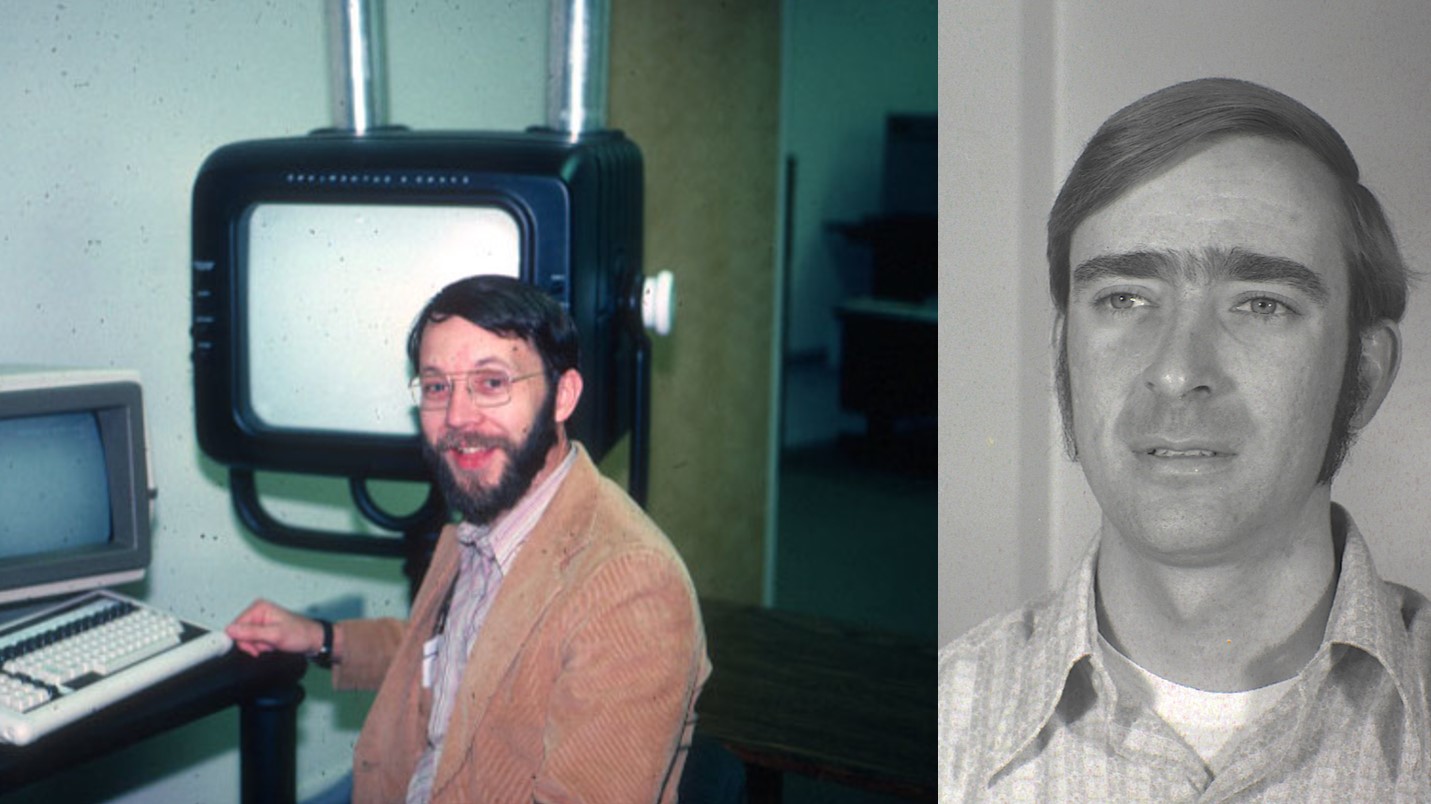
After Utah, Catmull led computer-graphics research at the New York Institute of Technology. George Lucas recruited him in 1979 to head Lucasfilm’s Computer Division. Alvy Ray Smith joined the following year as director of computer-graphics research.
The group developed technology for a film industry still working largely through physical materials and traditional processes. Computer animation was one part of a broader effort that also included digital editing and sound. Building a new kind of movie meant building the machinery behind it.
In 1986, Steve Jobs bought the division and established Pixar as an independent company. Catmull and fellow co-founder Smith brought years of research into that venture; animators, engineers and filmmakers would turn the possibilities into a studio.
The long road to Toy Story
Pixar’s early identity included selling the Pixar Image Computer. Short films demonstrated another future for the company: characters with personality, timing and emotional appeal. Technical sophistication could support storytelling.
That promise reached feature length in 1995 with Toy Story, the first fully computer-animated feature film. Directed by John Lasseter, it depended on the work of a large creative and technical team. Catmull’s contribution was foundational research and leadership that helped those people make something without a production blueprint.
Disney acquired Pixar in 2006. Catmull became president of Pixar and Walt Disney Animation Studios, extending his influence beyond the company he had helped establish. The student who wanted to work in animation had helped change its production methods.
The impact beyond one studio
Catmull’s technical legacy includes work on texture mapping, image depth and smooth surfaces. His collaboration with Jim Clark produced Catmull–Clark subdivision, a method for turning coarse meshes into smoother forms. Pixar’s RenderMan, developed by a team including lead architect Pat Hanrahan, carried advances in rendering into films made well beyond Pixar.
Catmull and Hanrahan received the 2019 ACM A.M. Turing Award for their fundamental contributions to 3D computer graphics. That recognition places the achievement in computing history as well as movie history.
His leadership became another part of his influence. In Creativity, Inc. and public interviews, Catmull explored how creative organizations can encourage candor, learn from failures and protect ideas while they are still unfinished. The challenge was to make room for uncertainty inside a company expected to deliver hits.
For Utah, the connection is bigger than a famous alumnus. The university gave ambitious researchers room to investigate problems whose commercial possibilities were still distant. Catmull carried that work into an industry where it helped artists create entirely new worlds.
The hand on the screen was a research experiment. It was also a glimpse of what happens when technical curiosity serves an artistic dream.