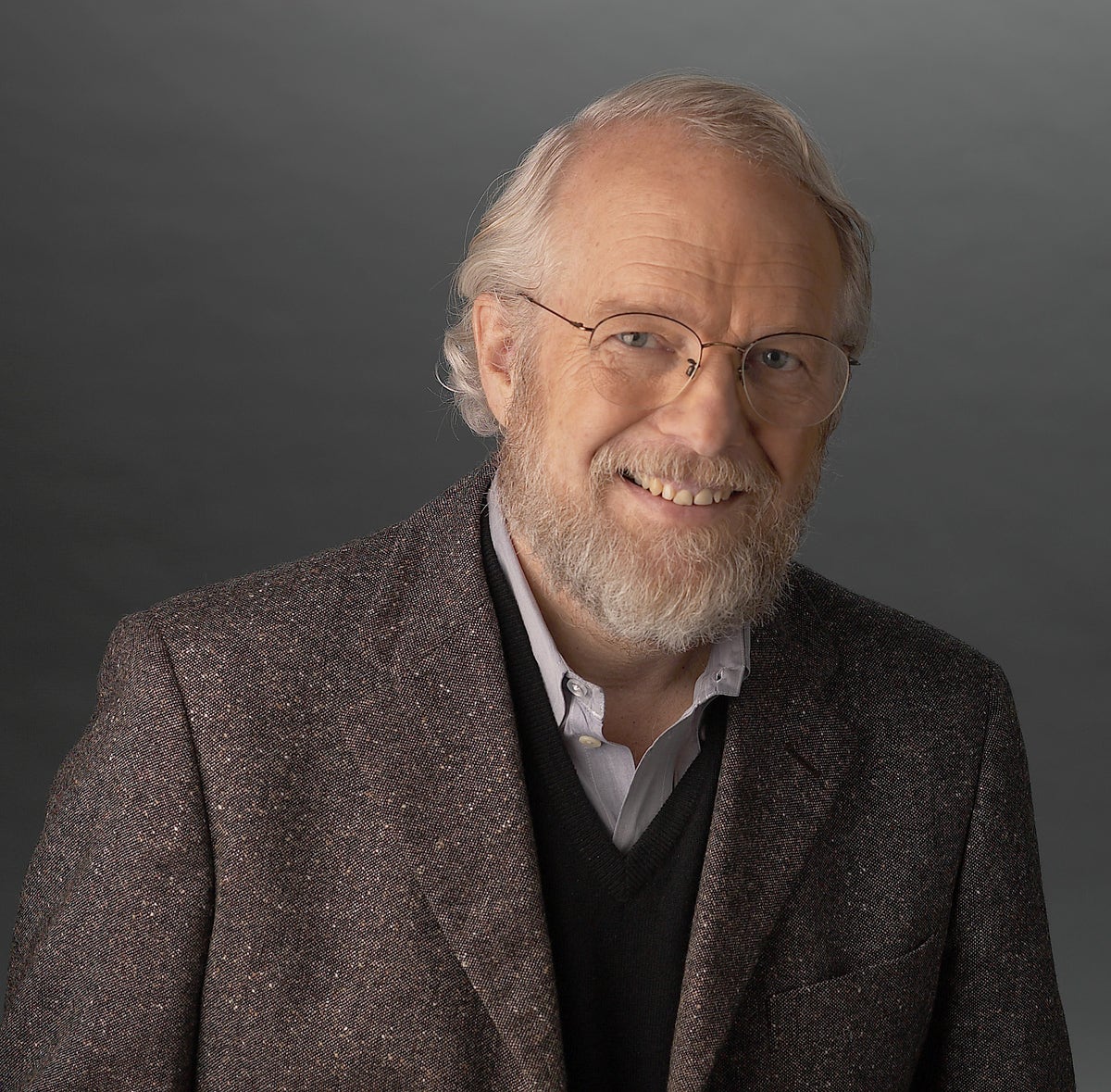
Before Adobe became a name on nearly every creative professional’s computer, John Warnock was a Utah student learning to love mathematics. The future co-founder wasn’t born with a business empire mapped out. A high-school teacher helped change his relationship with the subject—and with what he thought he could do.
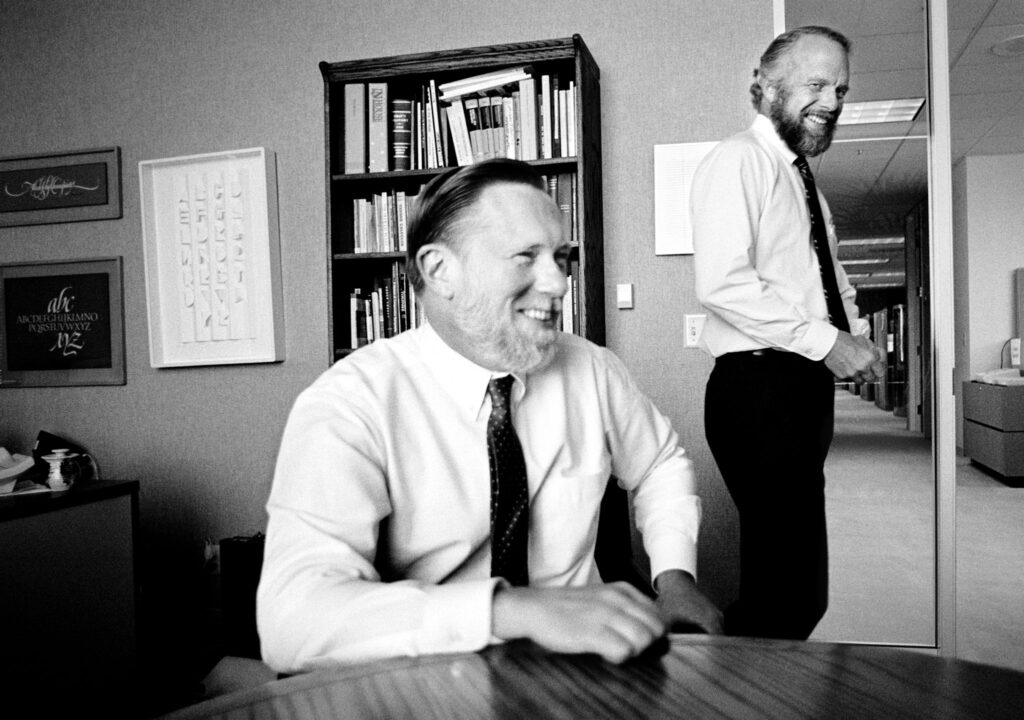
Warnock grew up in Holladay, attended Olympus High School and earned his degrees at the University of Utah. His path eventually led to Silicon Valley, where he and Charles “Chuck” Geschke founded Adobe in 1982. By fiscal 1999, the company was generating more than $1 billion in annual revenue.
The distance between those points was crossed through invention, partnerships and a willingness to keep backing an idea before its market was ready.
Utah taught him to see differently
Warnock’s childhood combined art and mathematics. His family drew and painted; a summer photography-shop job helped sustain his own interest in pictures. At the University of Utah, he entered the computer-graphics community built around David Evans and Ivan Sutherland, where researchers were working out how computers could represent a visual world.
That background mattered. Warnock understood a page as more than text: it was geometry, images, typography and relationships between shapes. Making computers describe that page accurately would become both a technical challenge and a business opportunity.
The idea Xerox didn’t take to market
At Xerox’s Palo Alto Research Center, Warnock and Geschke worked on Interpress, a language for describing printed pages. When Xerox declined to pursue the idea further, they left to build Adobe.
Their breakthrough product, PostScript, let computers describe text and graphics so compatible printers could reproduce a sophisticated page. Adobe licensed the technology to equipment makers. Apple’s adoption for the LaserWriter, introduced in 1985, helped turn that technology into a foundation of desktop publishing.
The partnership connected Adobe’s software to a product customers could buy and use. Designers could produce professional-looking pages from personal computers. Licensing let Adobe reach those users through other manufacturers rather than build every piece of equipment itself.
From one technology to a creative business
Adobe expanded from the language behind the page into tools for making it. Illustrator arrived in 1987; Photoshop followed in 1990. Warnock recognized the potential of digital photography and backed licensing Photoshop from its creators, Thomas and John Knoll.
That distinction is part of the business story. Warnock’s achievement included identifying other people’s inventions, supporting teams and bringing useful products to market. Adobe’s growing portfolio served different parts of the same creative process: drawing, editing images and preparing work for publication.
The bet that took years to pay off
Warnock’s Camelot project pursued another stubborn problem: a document should retain its appearance when moved between computers and software environments. Adobe introduced Acrobat and the Portable Document Format—PDF—in 1993.
Early sales were disappointing. In interviews with Knowledge at Wharton, Warnock and Acrobat engineering leader Bob Wulff recalled the pressure to abandon the product and the customer enthusiasm that preceded meaningful revenue. Warnock kept defending it. As email and the web spread, the need to exchange reliable documents became much easier to understand.
Adobe published the PDF specification, allowing others to build compatible software. The business could grow around creating and working with documents while the format reached beyond Adobe’s own applications. Persistence met a widening distribution channel and a real, recurring problem.
The billion-dollar milestone
Adobe’s 2000 annual report records $1.015 billion in revenue for fiscal 1999 and $1.266 billion for fiscal 2000—a 25 percent increase. Reported net income reached roughly $288 million in 2000. These were annual operating results, not a speculative valuation.
Warnock stepped down as CEO in 2000 and remained involved in leadership and governance afterward, sharing the chairmanship with Geschke until 2017. He died in 2023. Adobe’s later chapters involved many other leaders and employees; its foundation was already a substantial global software business.
For Utah’s creative community, his legacy is unusually tangible. It lives in the page a designer prints, the photograph someone edits, and the document that opens looking the way its author intended. Warnock helped build an empire by making other people’s work easier to create—and possible to share.