Photographs document the works in 2010, not their present condition. Locations and preservation history are drawn from the linked reporting; display access may change.
In January 2010, Park City was looking for its next great film. Banksy gave it something to look at on the walk between screenings: a cameraman, a praying child and a rat dressed for the movies.
The artist stayed anonymous. The work became local landmarks. Seeing it now means noticing both the images and the effort Utah has made to keep them.
Why Banksy came to Utah
Exit Through the Gift Shop, Banksy’s first feature film, premiered at Sundance on January 24, 2010, at Park City’s Library Center Theatre. The festival announced it as its surprise selection just days earlier. The film followed an amateur filmmaker’s encounter with street artists and the unstable boundary between making art and manufacturing fame.
Banksy’s accompanying street work brought those questions outside. Here are three surviving Park City pieces—and one now confined to photographs.
Camera Man and Flower: the image and the damage
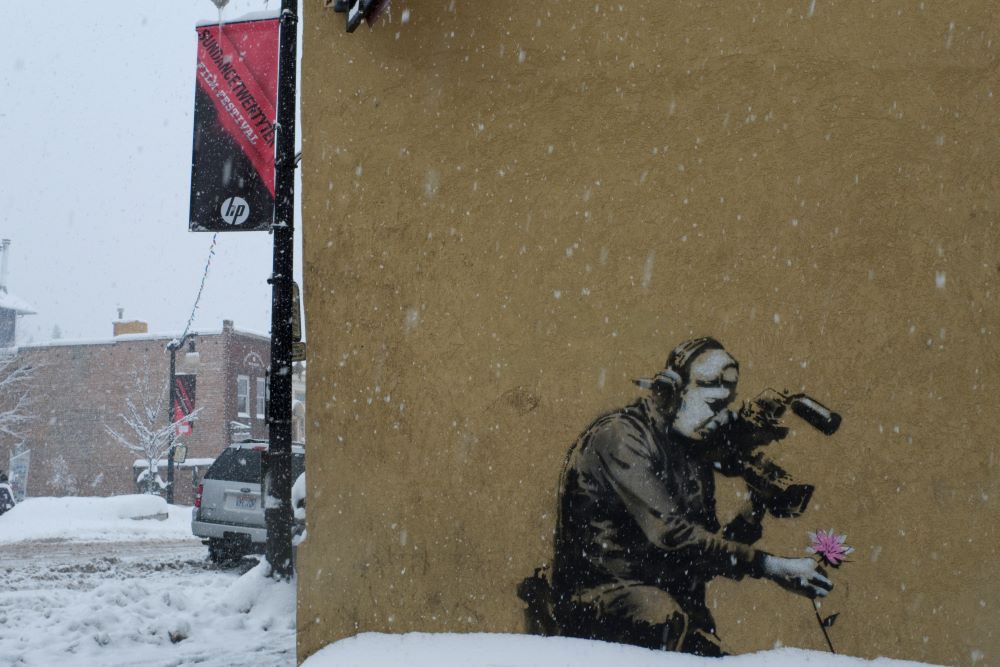
Find it on the side of Java Cow, 402 Main Street, by 4th Street. A kneeling camera operator points his lens at a pink flower he holds uprooted in his other hand.
The image reads like a warning about capturing something while destroying what made it worth seeing. Park City’s official visitor guide identifies it as one of the town’s surviving Banksys. It is protected behind glass; the surrounding frame is part of its preservation story, rather than the original stencil.
Praying Boy: innocence with a spray can
Look near the parking-garage wall behind the Cunningham Building at 537 Main Street. Also called Angel Boy, the image shows a kneeling child with pink wings, a halo and a paint can.
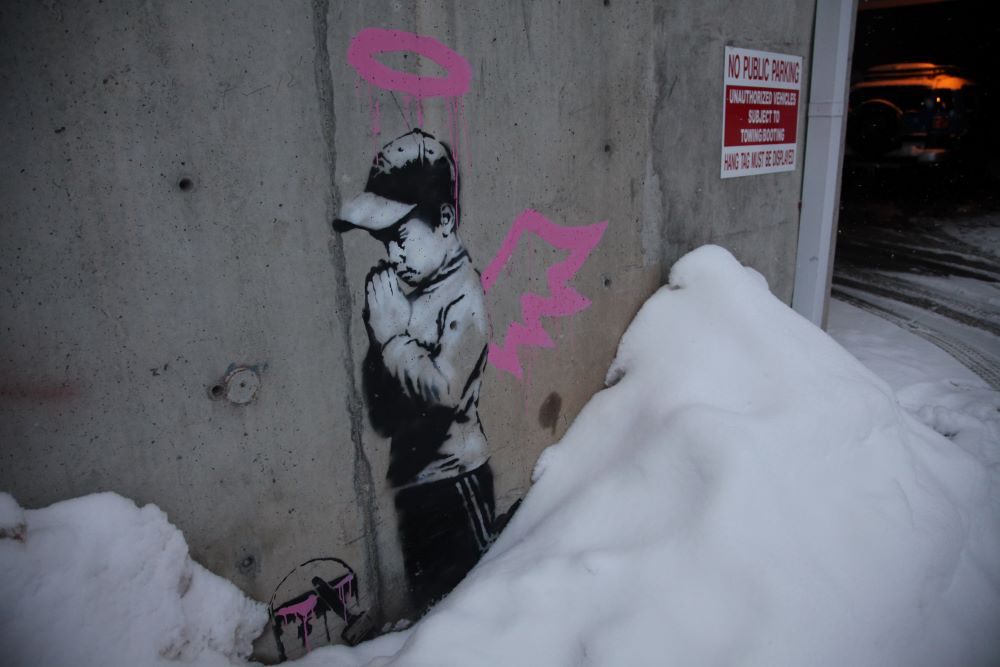
Lonely Planet documents its restoration after it was almost painted over. The combination of prayer and fresh graffiti leaves room for an uncomfortable question: who gets to decide whether a mark deserves forgiveness or protection? This is a restored work, not an untouched surface from 2010.
Cinema Rat: the piece that came back outside
Head to the covered breezeway on the north side of the Egyptian Theatre, 328 Main Street, connecting Main Street with Swede Alley. The rat wears red-and-blue 3D glasses, making it an especially fitting Sundance spectator.
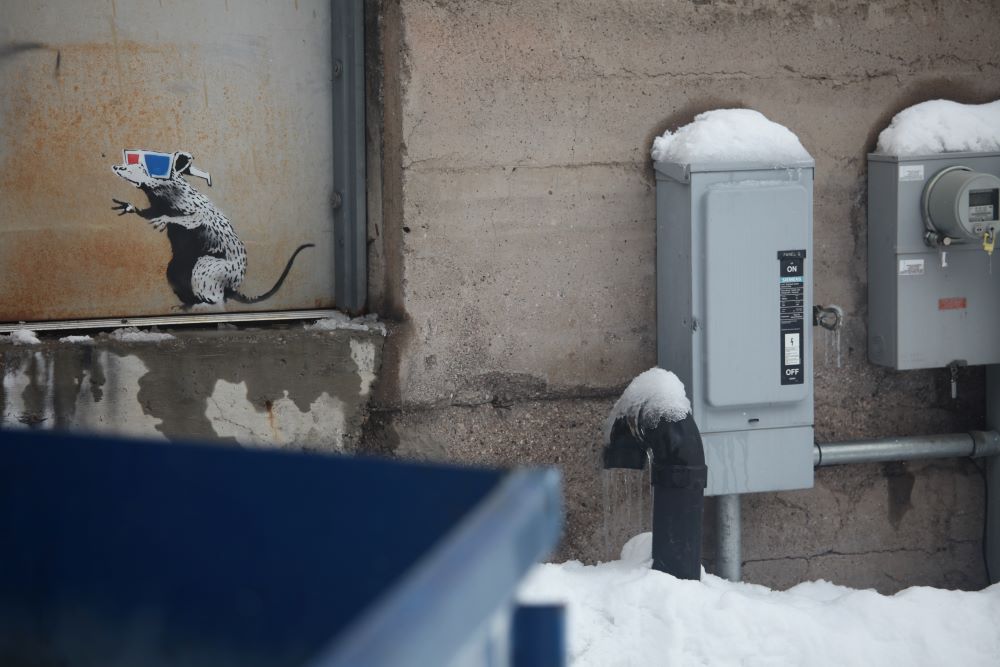
Sundance reports that staff removed the painted door for safekeeping; it returned to public view in early 2020 after years in storage and fundraising. The secured display is a chapter older guides sometimes miss.
The red barn signature: a stop in the archive
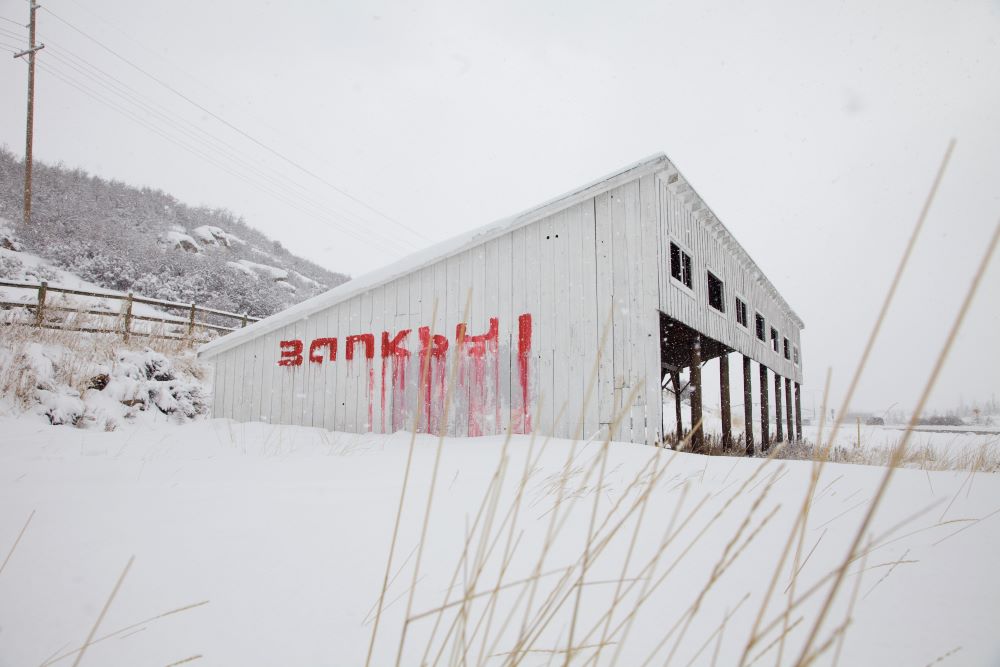
Near Kimball Junction and Interstate 80, Banksy put his name in red on a white barn. Sundance reports that the city repainted it. The photograph records a lost work, not a surviving mural to seek out.
Make it a Main Street art walk
The three surviving works fit into a walk through historic downtown Park City. Start at the Egyptian, continue to Java Cow, then look for Praying Boy near 537 Main. Use the linked directions, respect private parking areas and leave the protective displays alone. Conditions and access can change.
The most revealing part of Utah’s Banksy story may be what happened afterward. Uninvited paint became something people restored, secured and preserved. The question shifted from whether it belonged on the wall to what the town would lose if it vanished.